


Animals in Yellowstone: Wildlife to Look For

Written by Erin Hoppe Updated on 07/24/2026
Key Takeaways
- Yellowstone National Park has the largest concentration of mammals in the lower 48 states, with 67 mammal species and nearly 300 kinds of birds.
- The animals in Yellowstone most visitors hope to see include bison, gray wolves, grizzly and black bears, elk, and pronghorn.
- Lamar Valley and Hayden Valley at dawn or dusk are the best spots and times for wildlife watching.
- Keep your distance for everyone's safety: stay 100 yards from bears and wolves, and 25 yards from all other wildlife.
- Belgrade, Montana, home of the Bozeman Yellowstone International Airport, makes an affordable home base about 90 minutes from Yellowstone.
Yellowstone is one of the best places in North America to watch wild animals live their lives in the open. The park holds the largest concentration of mammals in the lower 48 states, and on a good morning, you might see a bison herd crossing a river, a coyote trotting through a meadow, and a bald eagle overhead before you've finished your coffee.
Whether it's your first trip or your fifth, knowing which animals in Yellowstone to look for, and where to find them, is the difference between a quick roadside glimpse and a morning you'll talk about for years.
Need a place to stay? Belgrade sits roughly an hour and a half from the park's entrances, and there are plenty of quality lodging options to choose from.
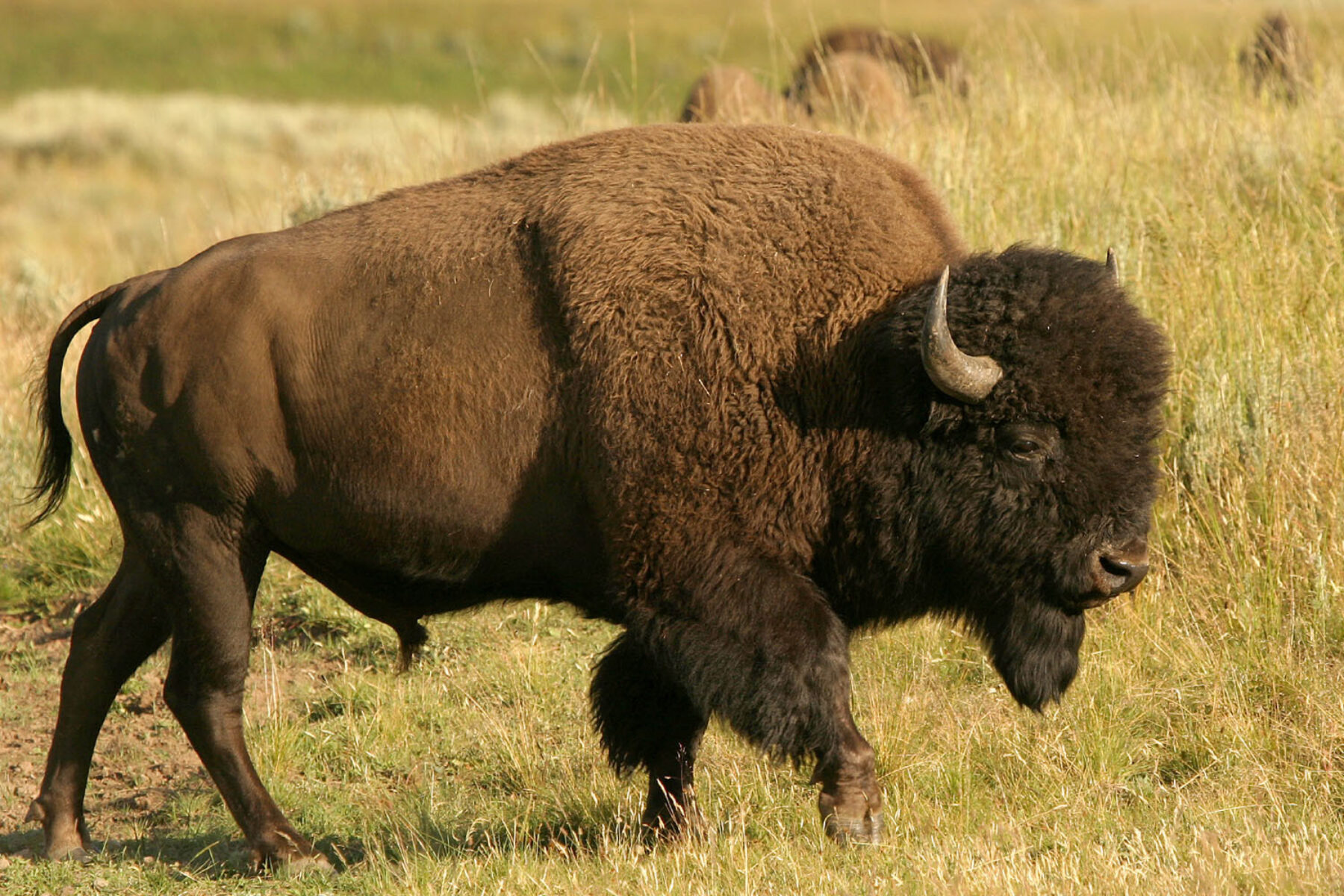
Bison: North America's Largest Land Mammal
If you see one animal in Yellowstone, it'll probably be a bison. Yellowstone is home to the only bison population in the country that has lived continuously in one place since prehistoric times, and the herd today numbers somewhere around 4,500 to 5,000 animals.
Due to their size, they're hard to miss. Bulls can weigh close to 2,000 pounds, and despite that bulk, a bison can run more than 30 miles per hour. Late spring brings the "red dog" calves, named for their reddish-orange coats.
You'll often find herds in the Lamar and Hayden valleys, and you may hit a "bison jam" when a group decides the road is the easiest route. Stay in your car, be patient, and enjoy the show!
As docile as they look, bison injure more visitors than any other animal in the park, almost always because someone got too close for a photo. The National Park Service asks you to stay at least 25 yards away, give them the right of way on trails and roads, and never get between a bison and the rest of the herd. Watch their body language, too: a raised tail, pawing, or head-bobbing means the animal is agitated and you need to back off slowly. If a bison reacts to you at all, you're already too close.
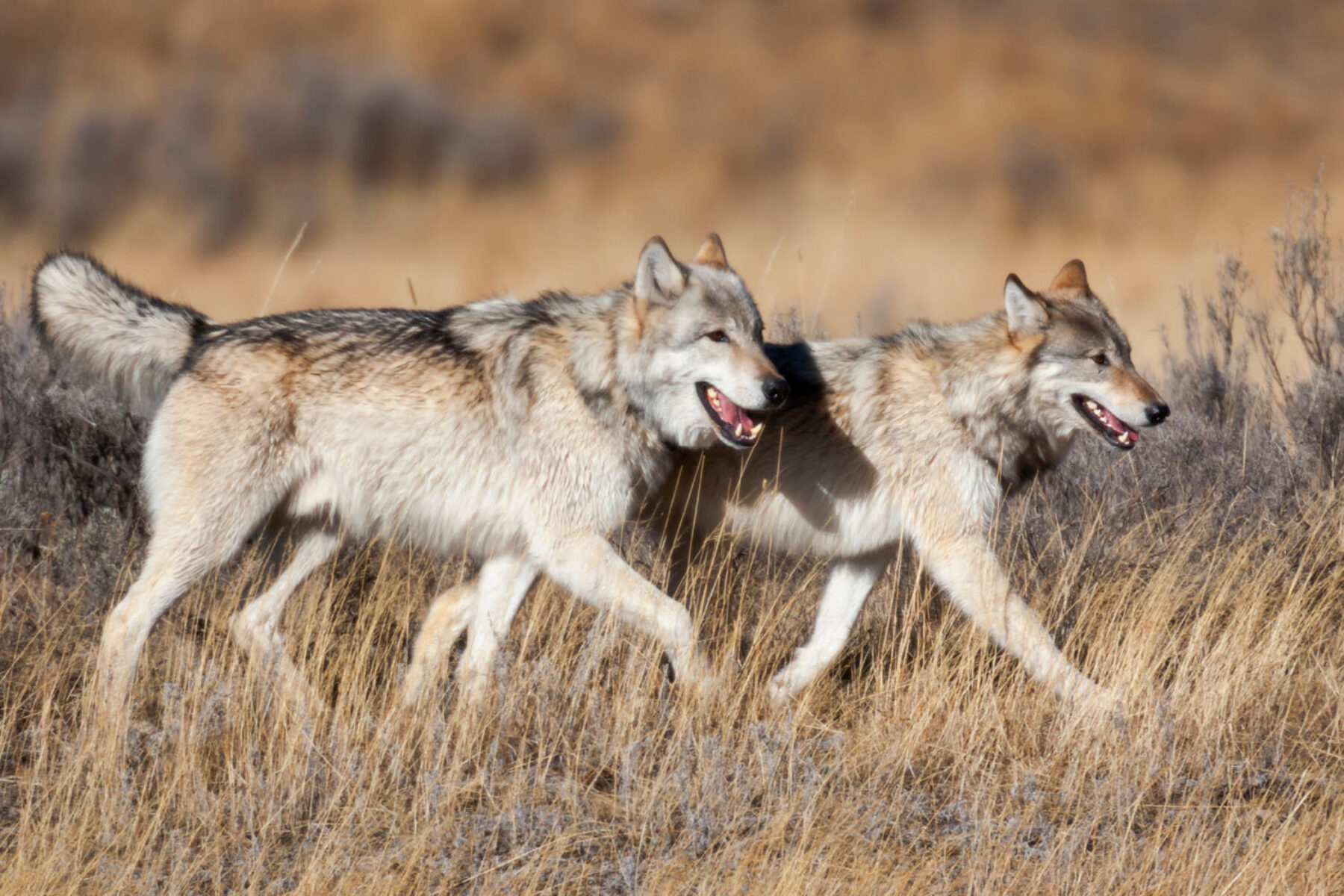
Wolves: Yellowstone's Comeback Story
Gray wolves were gone from Yellowstone for most of the 20th century. They were reintroduced in 1995 and 1996, and the park now has roughly 95 wolves spread across eight to ten packs. Their return is one of the most-studied wildlife recovery stories anywhere.
The Lamar Valley, sometimes called "America's Serengeti," is the most reliable place on earth to watch wild wolves. Bring binoculars or a spotting scope, get there at first light, and look for the small clusters of wildlife watchers already set up at the pullouts. They're usually happy to point you toward whatever's moving.
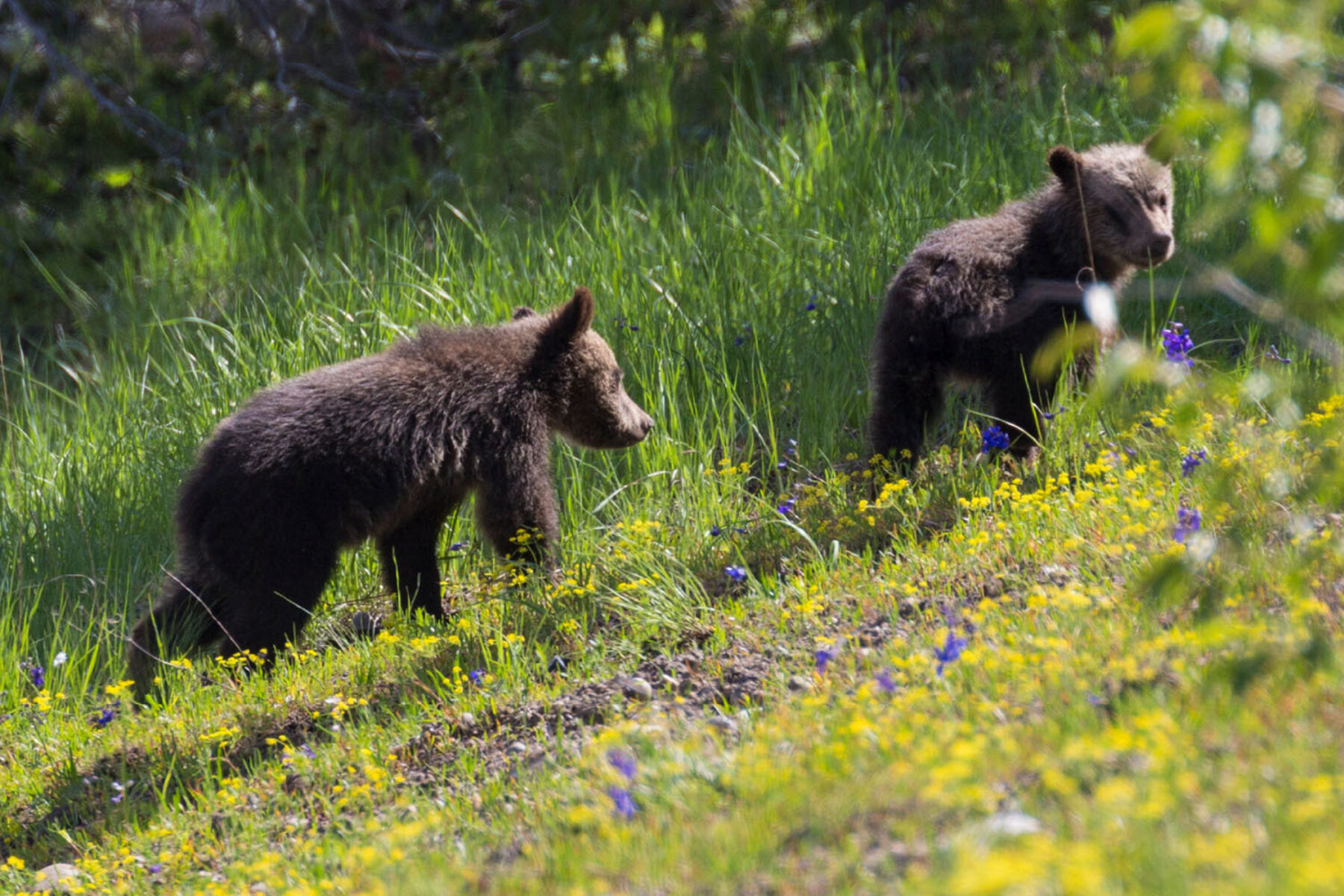
Bears: Telling Grizzlies From Black Bears
Yellowstone is one of the few places south of Canada where grizzly and black bears share the same ground. The National Park Service estimates 150 to 200 grizzlies have home ranges at least partly inside the park. Black bears aren't given an exact count, but they’re considered common, especially on the northern range.
Telling them apart is easier than it sounds. Grizzlies have a pronounced shoulder hump and a dished, concave face. Black bears have no hump, a straighter snout, and a habit of climbing trees. Ironically, color won't help you: only about half of "black" bears are actually black, with the rest running cinnamon, brown, or blond. Bears can show up almost anywhere, but the Tower and Mammoth areas are good places to start looking.
A few habits keep both you and the bears safe. The National Park Service asks visitors to stay at least 100 yards from any bear. On the trail, hike in groups and make noise as you go, calling out "Hey, bear!" near blind corners and thick brush so you don't surprise one. Carry bear spray, keep it somewhere you can reach in seconds, and know how to use it before you set out. Never feed wildlife or leave food unsecured. A bear that learns to associate people with snacks is a bear (and human!) in danger. All of Yellowstone is bear country, so it pays to be ready wherever you are.
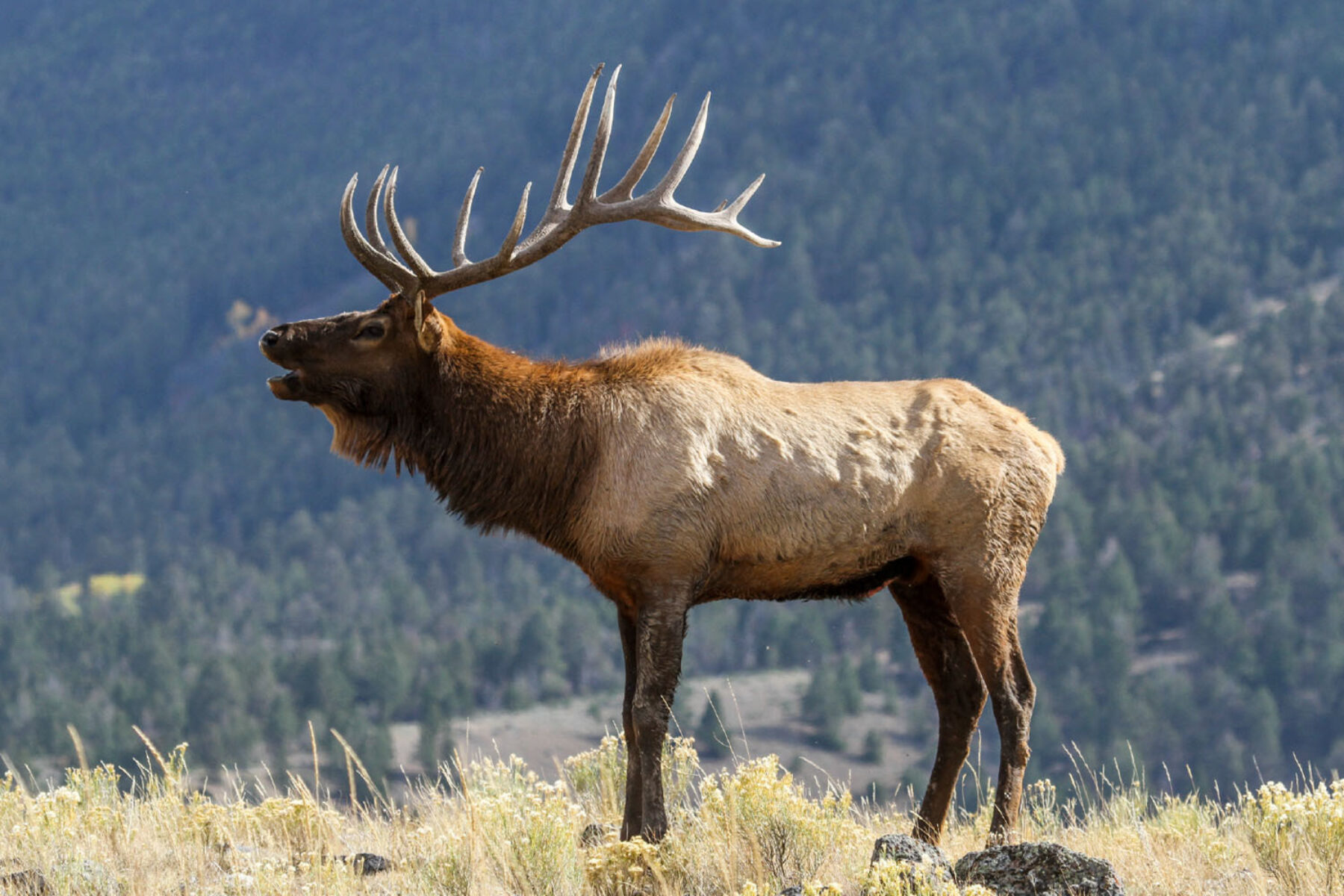
Elk and Pronghorn (and Other Hoofed Animals)
Elk are one of the most abundant large animals in Yellowstone. The National Park Service estimates the park's summer range holds 10,000 to 20,000 elk across six or seven herds, most of which move to lower elevations for winter. Fall is the time to catch them in action, when bull elk grow antlers up to six feet wide and fill the valleys with their bugling during the rut. Mammoth Hot Springs and the Madison River area are dependable spots to see them.
Pronghorn are worth slowing down for, too. They're the fastest land animal in North America and one of the last survivors of a group that evolved on this continent millions of years ago.
Moose are less common to spot, but they’re in Yellowstone! Look for them along willow-lined waterways and in the forests near the Northeast Entrance and around Yellowstone Lake.
Bighorn sheep and mountain goats stick to the park's rocky northern country. The National Park Service places bighorn sheep in northern Yellowstone, where the Gardner River canyon, Mount Washburn, and Lamar Valley are good bets, while mountain goats favor high cliffs like Barronette Peak near the Northeast Entrance.
Birds and Small Mammals: Yellowstone's Overlooked Wildlife
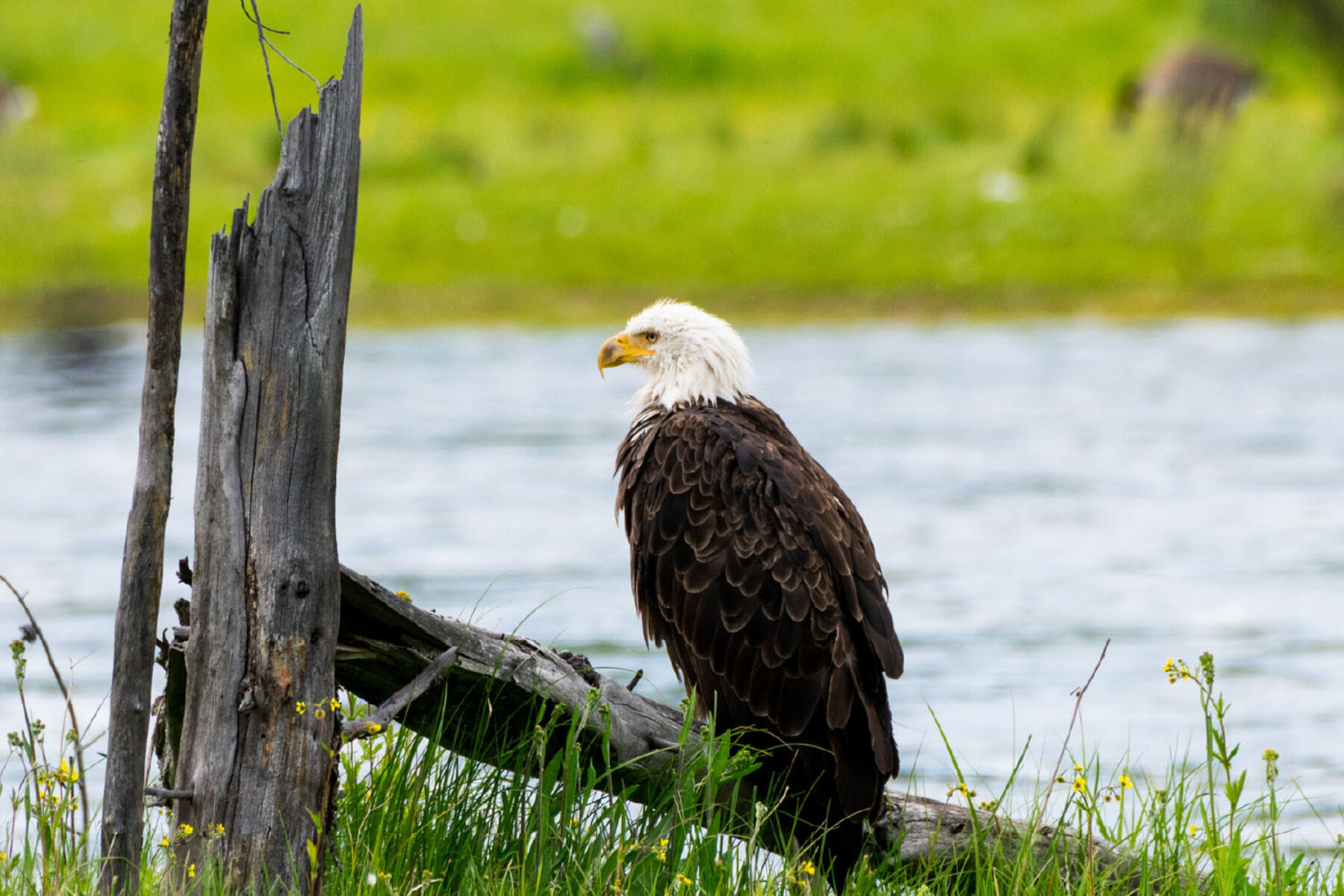
The big mammals get the attention, but Yellowstone is a strong birding destination. The National Park Service has recorded nearly 300 bird species in the park, about 150 of which nest there. Keep an eye out for trumpeter swans on the rivers, ospreys diving for fish, and bald and golden eagles riding the thermals. Ravens are everywhere and surprisingly clever; they'll often shadow wolf packs, waiting for a share of a kill.
Closer to the ground, coyotes are common in the meadows and most vocal at dawn and dusk. The park's smaller residents are worth a look, too. Watch the rocky slopes for the yellow-bellied marmot, a stout, whistling member of the squirrel family that suns itself on boulders, and for the American pika, a tiny relative of rabbits that gathers little "haystacks" of dried plants to survive the winter. In open meadows and sagebrush, Uinta ground squirrels pop up and down from their burrows all summer. With a little patience, even these overlooked animals reward a careful eye.
Fish and Water Animals: Aquatic Animals in Yellowstone
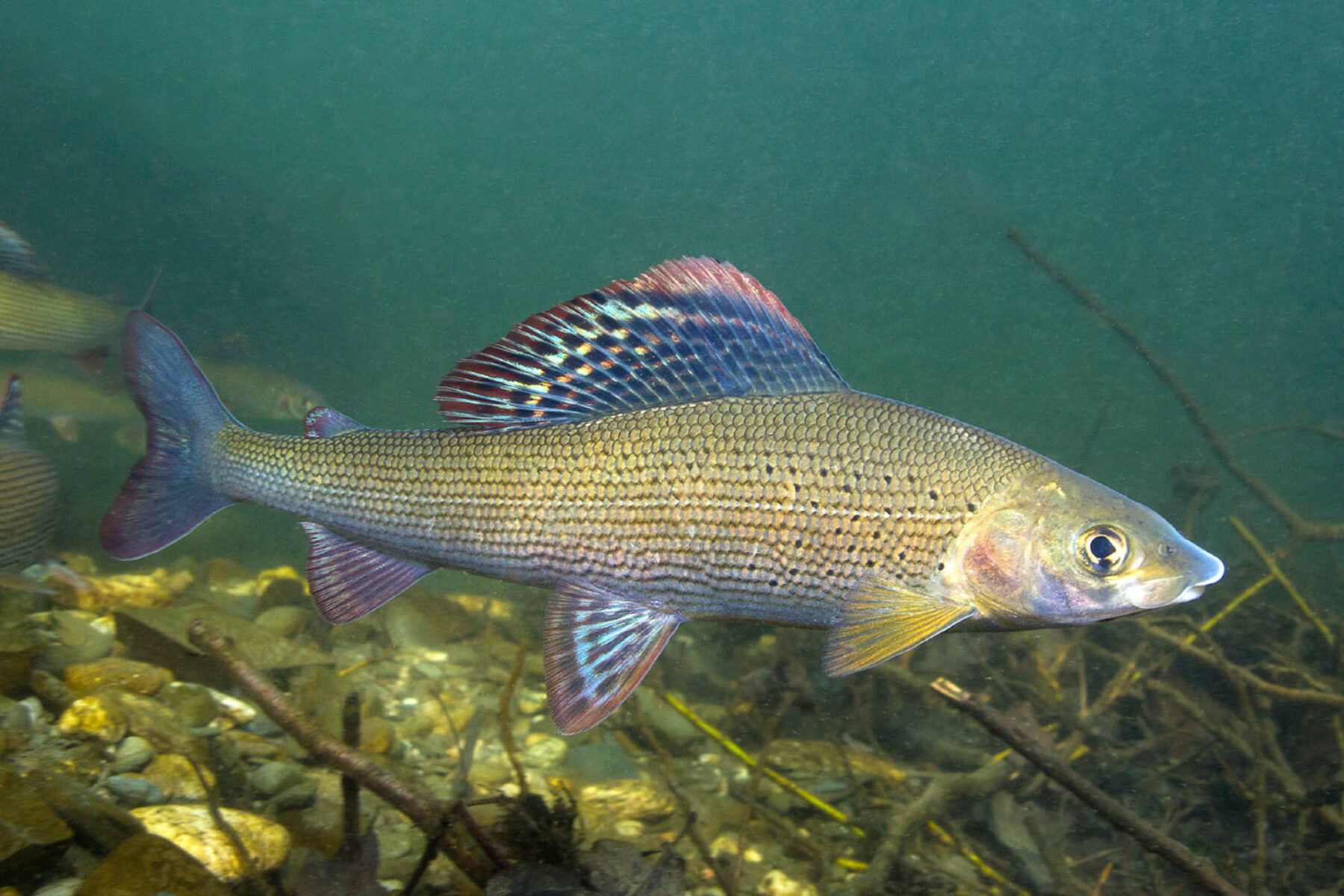
About 5% of Yellowstone sits under water, and that world is every bit as alive as the valleys. The park's signature fish is the Yellowstone cutthroat trout, a native species the National Park Service calls a keystone of the food web; grizzly bears, osprey, bald eagles, and river otters all rely on it. The native Arctic grayling is rarer and a treat to spot, with a tall, sail-like dorsal fin you won't see on any other fish in the park.
There's a conservation story here, too. Invasive lake trout, likely introduced illegally to Yellowstone Lake, nearly wiped out the cutthroat, so the park now runs one of the largest nonnative-fish removal efforts in the country to bring the native trout back. It's working: as cutthroat return to their spawning streams, the bears and birds that feed on them are returning, too.
There’s more than just fish in the water! River otters hunt the lakes and streams, beavers (around 500 in the park) build the ponds that reshape whole stretches of habitat, and in summer, American white pelicans nest on islands in Yellowstone Lake, an unexpected sight at over 7,700 feet.
If casting a line sounds like your speed, our guide to the best fly fishing in Montana covers the rivers in Southwest Montana.
Make Belgrade Your Yellowstone Basecamp
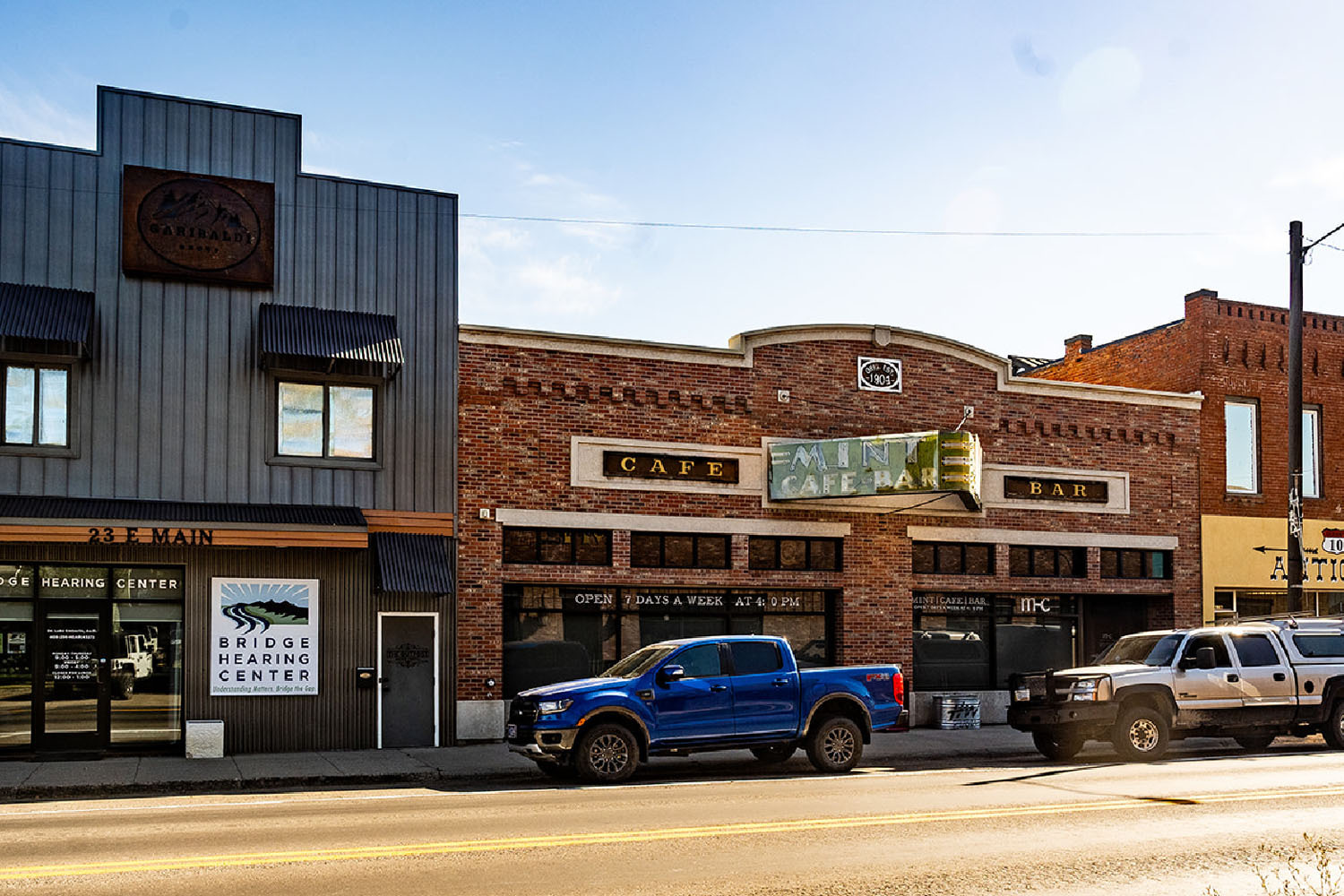
Wildlife watching means early mornings, so where you sleep matters. Belgrade, home of the Bozeman Yellowstone International Airport, sits about 90 minutes from the park with easy highway access and lower nightly rates than you'll find closer to the park entrances. Land at BZN, pick up your rental car, and you're a short drive from your hotel without fighting traffic.
It's a comfortable setup for families, too, with affordable lodging and a quiet, small-town pace after a long day in the park. For more on stretching your trip budget, see our guide to visiting Yellowstone on a budget, and if you're planning to fill out the rest of your itinerary, our summer day trips from Belgrade cover plenty of nearby ground.
Ready to plan your wildlife trip? Browse Belgrade hotels to find a basecamp that fits your budget!
Meet Erin Hoppe
As Executive Director of the Belgrade Chamber of Commerce, I’m honored to help support and celebrate our local businesses and community. I’ve been part of the Chamber for nearly six years, working in membership and events before stepping into this role in March 2025. Born and raised in Montana, I’ve called Belgrade home since 2005. When I’m not at the Chamber, I enjoy visiting our parks, shopping, grabbing a coffee at a local shop, and watching my kids’ sports over the years. My family and I are proud supporters of our schools, Panther athletics, and the many local programs that make Belgrade special.